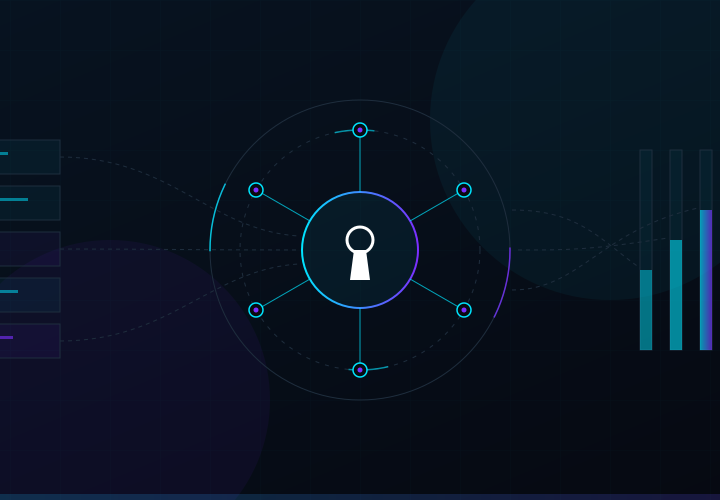
An assistant that doesn't know your life is a timer with a personality. But knowing your life means holding it, and we've spent twenty years doing anonymization theater instead of security.
Dear Tech Blog
Most Recent
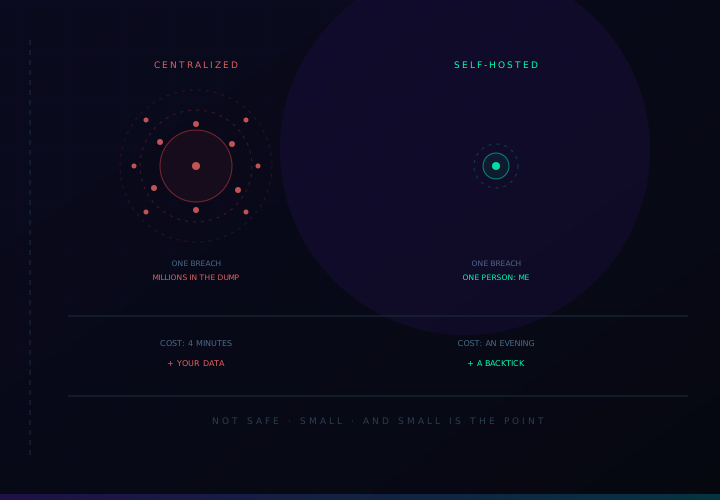
An editorial. I lost a night to a single backtick in a config file; the out-of-the-box version would have taken four minutes and asked for one small payment I wasn't willing to make. On blast radius, the oopsie economy, and why self-hosting isn't safe — it's small.
Read EditorialAn assistant that doesn't know your life is a timer with a personality. But knowing your life means holding it, and we've spent twenty years doing anonymization theater instead of security.
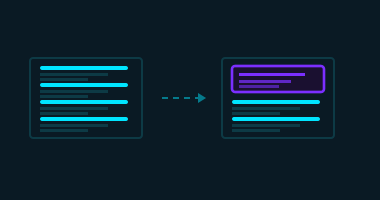
If your work is at the frontier of a field, the model has never seen it — and fine-tuning on your papers makes it worse. The decision path that works: parsing, chunking, hybrid retrieval, hardware, and citation discipline.
Hiring, housing, lending, insurance and healthcare all run automated screening — usually with no notice. The documented cases, and the specific rights that force a human to look at your file. AI Watch #02.
30+ states require disclosure, no federal law does, and detection is structurally behind. What holds up before November — and why never to ask a chatbot to verify. AI Watch #03.
Stop asking whether it looks fake and start asking where it came from. The SIFT method, reverse image search, Content Credentials — and why detectors and chatbots can't do this job.
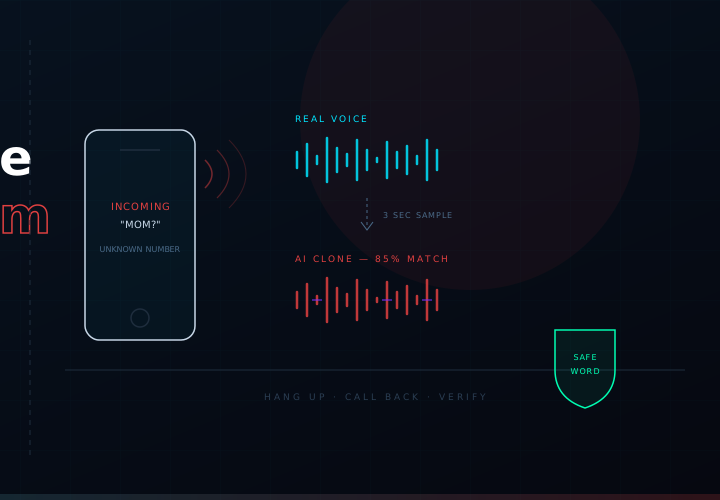
Three seconds of audio is enough for an 85% voice match. The three scam scripts, the $25M Arup case, and the one-word defense every family should set up tonight. AI Watch #01.
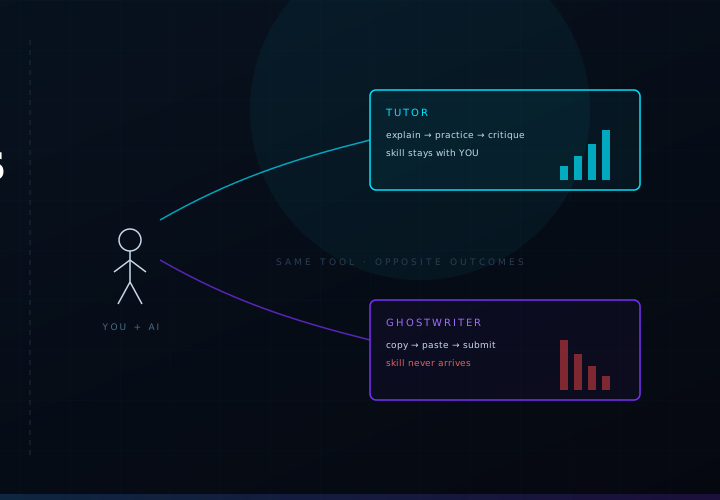
92% of students use AI — the question is how. The one-question test that separates tutor from ghostwriter, the green and red lists, and the detector false-positive problem.
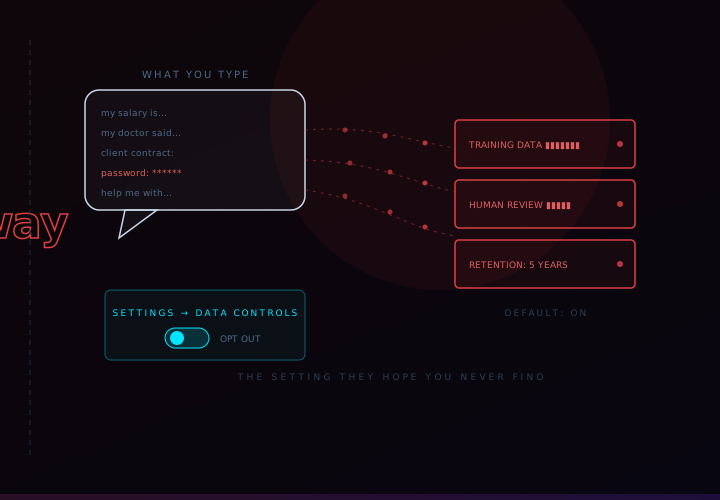
Every consumer AI tier trains on your chats by default — even the paid ones. Provider-by-provider audit, the buried opt-outs, the never-paste list, and the private alternatives.
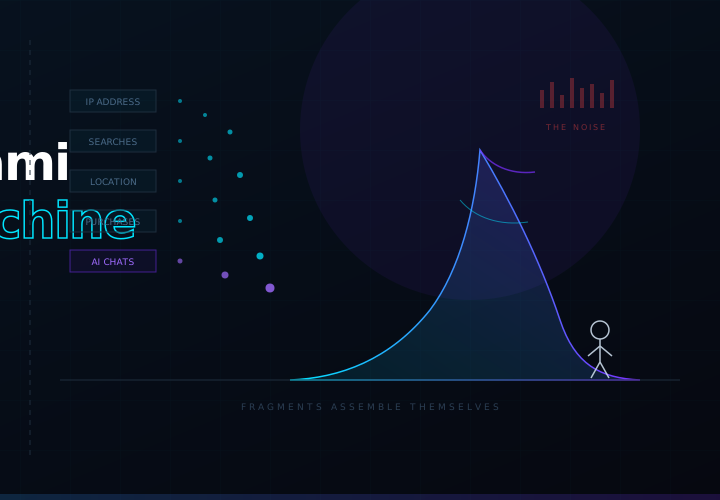
An editorial: the data trade we normalized is about to scale beyond anything we agreed to — while the loudest voices in AI are salesmen. The fragments assemble themselves.
Five functions where AI genuinely saves hours, the jobs it can't be trusted with, and the vendor traps the FTC is prosecuting — AI-washing, guaranteed-ROI scams, hidden data sharing.
The skills, certifications, and career moves that actually hold up as AI reshapes the workplace — 5 skills AI won't replicate, honest cert assessments, and a 90-day action plan.
Hallucinations are structural — not a bug being fixed. Real cases (Mata v. Avianca, Google Bard, Air Canada), the 69% medical citation error rate, a verification checklist, and 6 grounding tools.
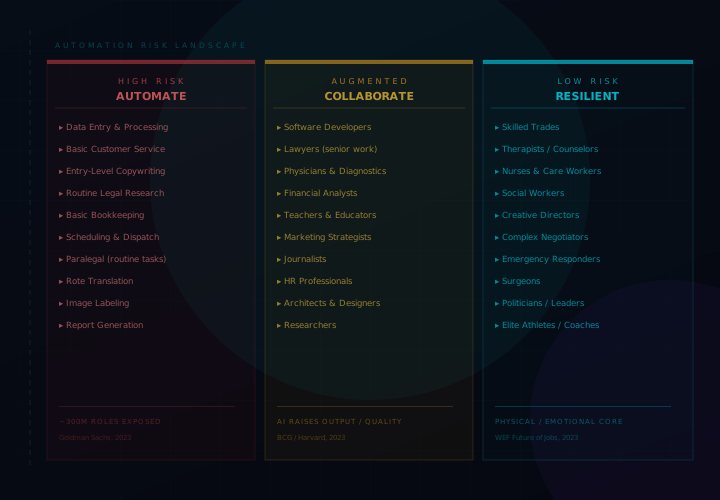
Nine industries assessed with role-level breakdowns and a five-question personal risk framework. Goldman Sachs, OpenAI/Penn, WEF, McKinsey, MIT — 11 primary sources.
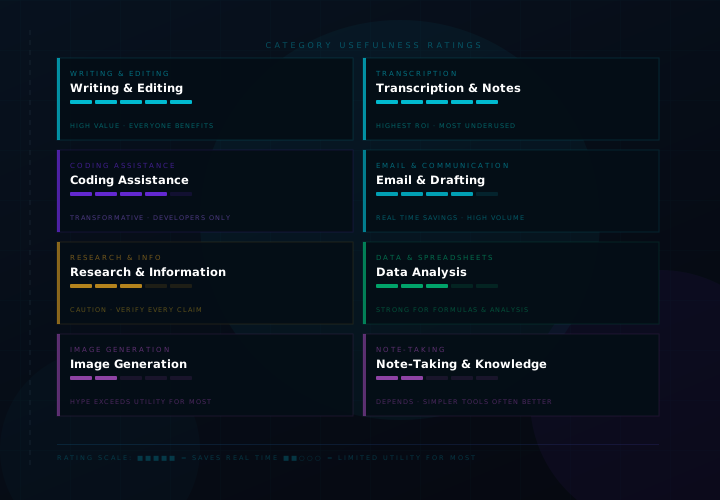
Eight categories rated: writing, transcription, coding, email, research, data, image gen, and note-taking. What genuinely works, what fails, and who benefits. Backed by Harvard, MIT, and GitHub Copilot research.
Visual, audio, and behavioral tells AI-generated content leaves behind — plus 8 free detection tools. Cited: FBI IC3, Reuters, Europol, Stanford, McAfee, DARPA, 14 sources.
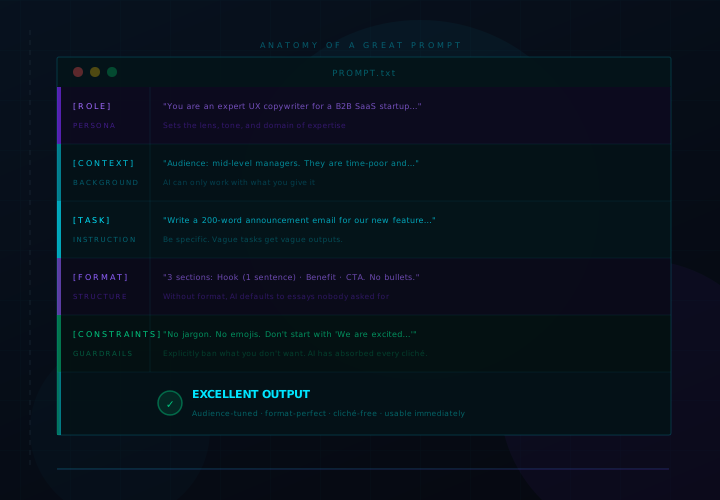
Seven techniques — role assignment, context loading, format specification, chain-of-thought, few-shot examples, and more — each with before-and-after examples you can copy right now.
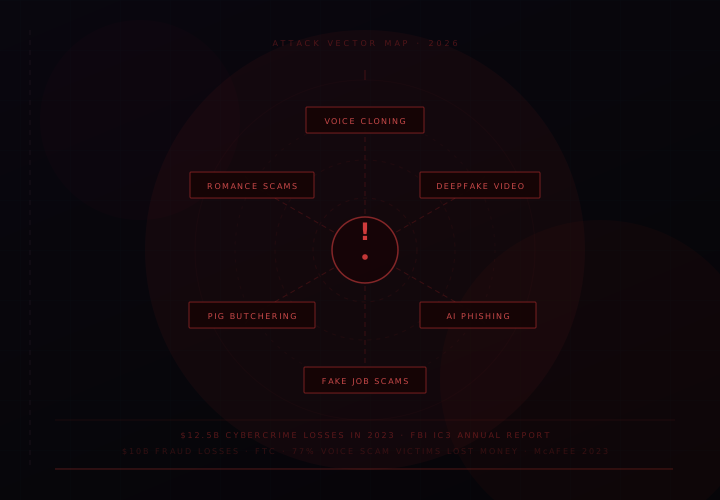
Voice clones, real-time deepfakes, AI phishing, fake job interviewers, and pig butchering crypto fraud — fully sourced from FTC, FBI IC3, McAfee, Europol, and DOJ.
Real prompts, before-and-after examples, every tool with current pricing, and a complete job board guide organized by industry and company type.
The complete honest guide — GPU tiers from $200 to $2,000, real storage numbers, Ollama setup, hosted cloud alternatives with pricing, and every risk you need to know before you build.
From statistical word guessing to transformer-powered reasoning — an accessible breakdown of how large language models work and where the field is headed.
A chronological, academically grounded account of how AI evolved from Turing's 1950 thought experiment through the Dartmouth Conference, two AI winters, and the Transformer era.
A real assistant does far more than answer questions. Here's what it would actually require — and why security is the hardest problem to solve.
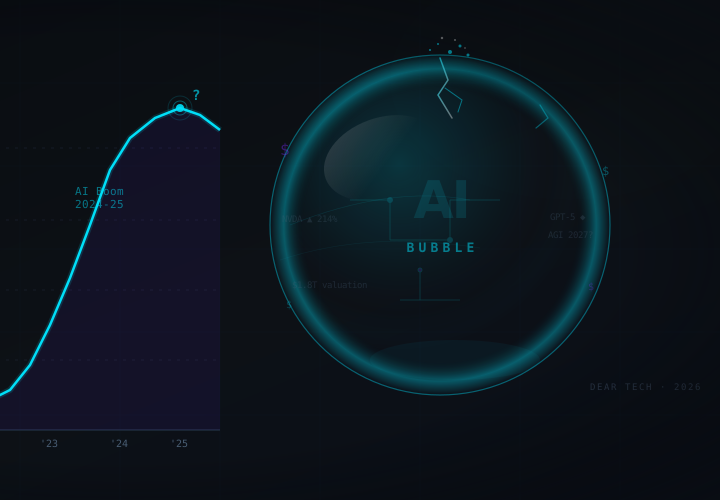
The AI market has ballooned to extraordinary valuations, drawing inevitable comparisons to the dot-com era. Are we heading for a crash — or is this time genuinely different?
Businesses and individuals aren't just asking for automation anymore — they want AI that understands context, anticipates needs, and acts as a genuine collaborator.
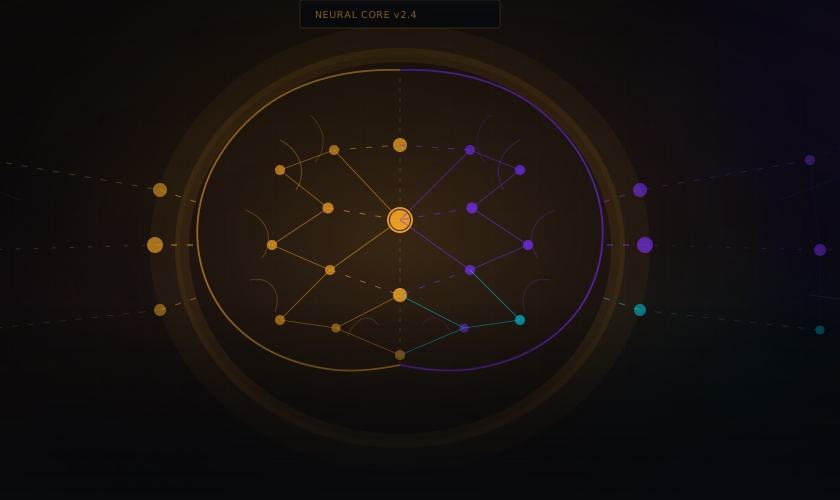
Unpacking how neural network depth transforms pattern recognition, and why the architecture behind the model matters as much as the data.
Improving AI means going beyond bigger models. Quality data, diverse datasets, smarter algorithms, and stronger hardware all play a role.
From poor UX to inadequate security, here are the top 5 reasons modern AI assistants fall short — and what needs to change.
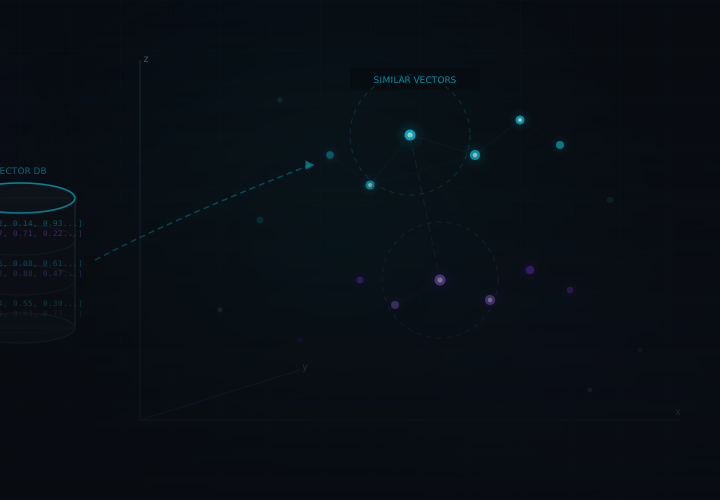
Vector databases are the silent engine behind modern AI — storing data as high-dimensional embeddings and enabling lightning-fast similarity search at scale.
RAG and direct AI training both shape what your model knows — but in fundamentally different ways. Here are the top 5 things you need to know before choosing your approach.
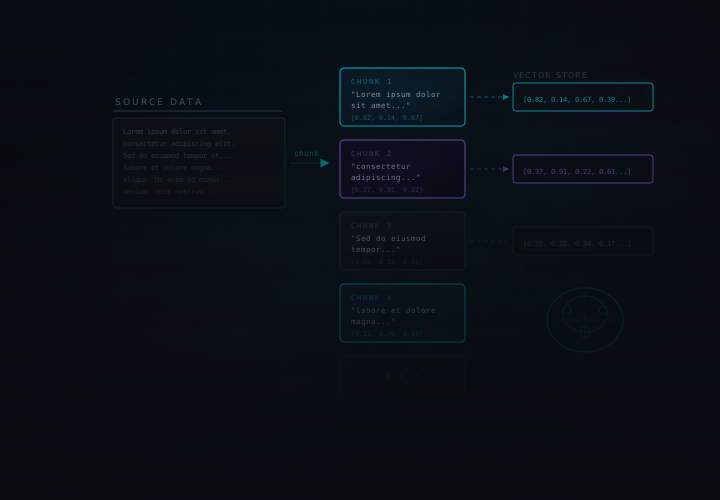
Chunking is the hidden architecture behind how AI processes, remembers, and makes sense of complex information — and it's changing the way we build intelligent systems.